

Prison Horror Films Part 1: Haunted INSTITUTIONS
Prison Horror Films and the haunted institution
Let’s be honest, for a lot of people, the idea of going to prison feels just as terrifying as any horror movie. When we picture incarceration, we imagine abandonment, control, suffering, and places we never want to see from the inside.
Most people will never experience prison firsthand, so where do these ideas and images come from?
🎥 Movies
📚 Books
📺 TV shows
🎧 Podcasts
🎮 Video Games
Pop culture does a great job of providing the ideas and images, regardless of how accurate they may be.
Since we don’t have easy access to prisons, what happens inside them stays largely unknown. Horror films give audiences a dark, voyeuristic look at what prison might be like, turning punishment and pain into something we watch for entertainment.
And that’s where things can get uncomfortable.
Horror films set in prisons take our existing fears about incarceration and push them to the limit. Inmates lose their humanity, institutions rot from the inside, and we, as the viewer, might be trapped forever. Whether the threat comes from ghosts, demonic forces, or the system itself, prison horror films tell stories about:
abandonment
cruelty
helplessness
survival inside brutal systems
Every time we watch one of these films, we become spectators of carceral suffering. Over time, those images shape how we imagine punishment and justice should be.
This post kicks off a blog series (and possible video counterparts!) on prison horror films, starting with one of the most common themes in the genre: the haunted institution.

Yikes! Can you imagine staying here?
👻 Haunted Institutions
Long before horror films ever set foot inside a prison, the public already viewed them as scary places. Popular culture has primed us to think of prisons as places where we can lock up dangerous criminals and throw away the key.
So when horror films explore prisons as haunted spaces, it feels almost inevitable.
Unlike haunted houses or old hospitals, prisons in horror films often refuse to let anyone leave, even after death. Ghosts of inmates or administrators roam cellblocks because something has been unresolved or kept secret. In essence, the prison becomes a massive haunted house filled with years and years of pain and trauma.
That can’t be haunted, right?
🔌A Prison That Never Forgot
Surprisingly, there aren’t a ton of prison horror films. I know, right? You would think there would be plenty! I mean, there’s a ton of horror films involving mental hospitals-you’d think prisons would get the same sort of attention. Wrong!
So, one of the earliest prison horror films is Prison* (1987)-I know, 1987! The film grabs the audience by opening with an execution process. We have the POV of an innocent man walking through cold hallways toward the electric chair. The guards are detached, and one of them tears a crucifix from his neck. The switch flips and the inmate contorts and dies. The system moves on.
*Creative title, I know 🙄
Years later, prison overcrowding leads officials to reopen the now abandoned prison. The decision focuses on efficiency, not humanity. The same man responsible for the execution returns as warden. For the sake of efficiency, inmates are forced to renovate the decaying structure. One point, they break into the sealed execution chamber, and that’s when all hell breaks loose.
A strange energy escapes, tied to the injustice that happened in that room decades earlier. From there, the prison turns violent in ways that feel symbolic:
a man in solitary confinement is cooked to death when his cell becomes an oven
another inmate who tries to escape is crushed and tangled in wires and metal
guards who abuse their power face punishments tied to their cruelty
The justice here doesn’t come through official channels, it arrives as supernatural vengeance.
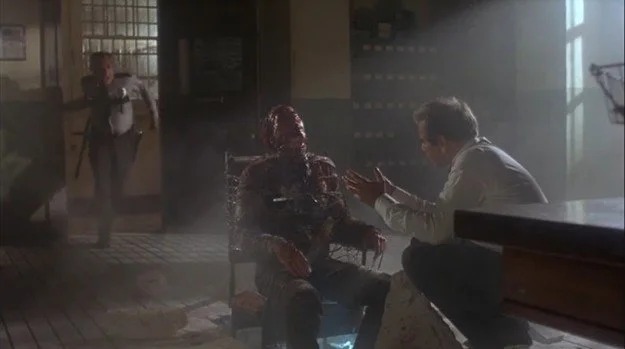
Prison (1987): The fate of Officer Wallace
📹 Ghost Hunters Behind Bars
Some more recent prison horror films take a different route by following paranormal investigators who believe abandoned prisons are natural haunted spaces.
This idea shows up everywhere.
👻 Ghost-hunting TV shows
🏚️ Haunted prison tours
🎃 October haunted attractions*
Abandoned prisons are framed as places where violence soaked into the walls and never left.
*I have to say, I’ve never felt comfortable with turning abandoned prisons into haunted attractions. There’s something kinda…disrespectful (?) about it, you know what I mean?
In The Haunting of Cellblock 11 (2014), a paranormal crew struggling to increase their show’s ratings are in desperate need to find a haunted location. I think the best line of the entire movie was from Dee Wallace with, “Your show is called ‘Ghost Sightings.’ Not Ghost Séance. Not Ghosts That We Kind of Think are There. Ghost Sightings!.”
Lucky for them, an old man wants them to investigate an abandoned prison he owns. Like many horror films, the locals warn them to stay away or else they’d “be messin’ with the Devil’s work.” The crew meets a guide who describes the violence that happened inside and reminds them that prisons bring out the worst in people.
Of course they go in anyway.
When the cameras roll, they capture shadowy figures, unexplained movement, and possession. Eventually, they learn the prison’s true horror comes from a doctor who tortured inmates under the guise of “treatment.”
When the truth comes out, justice takes a supernatural form. The man responsible (the old man who asked the crew to investigate his abandoned prison!) is locked inside the prison and left to face the spirits of those he harmed.
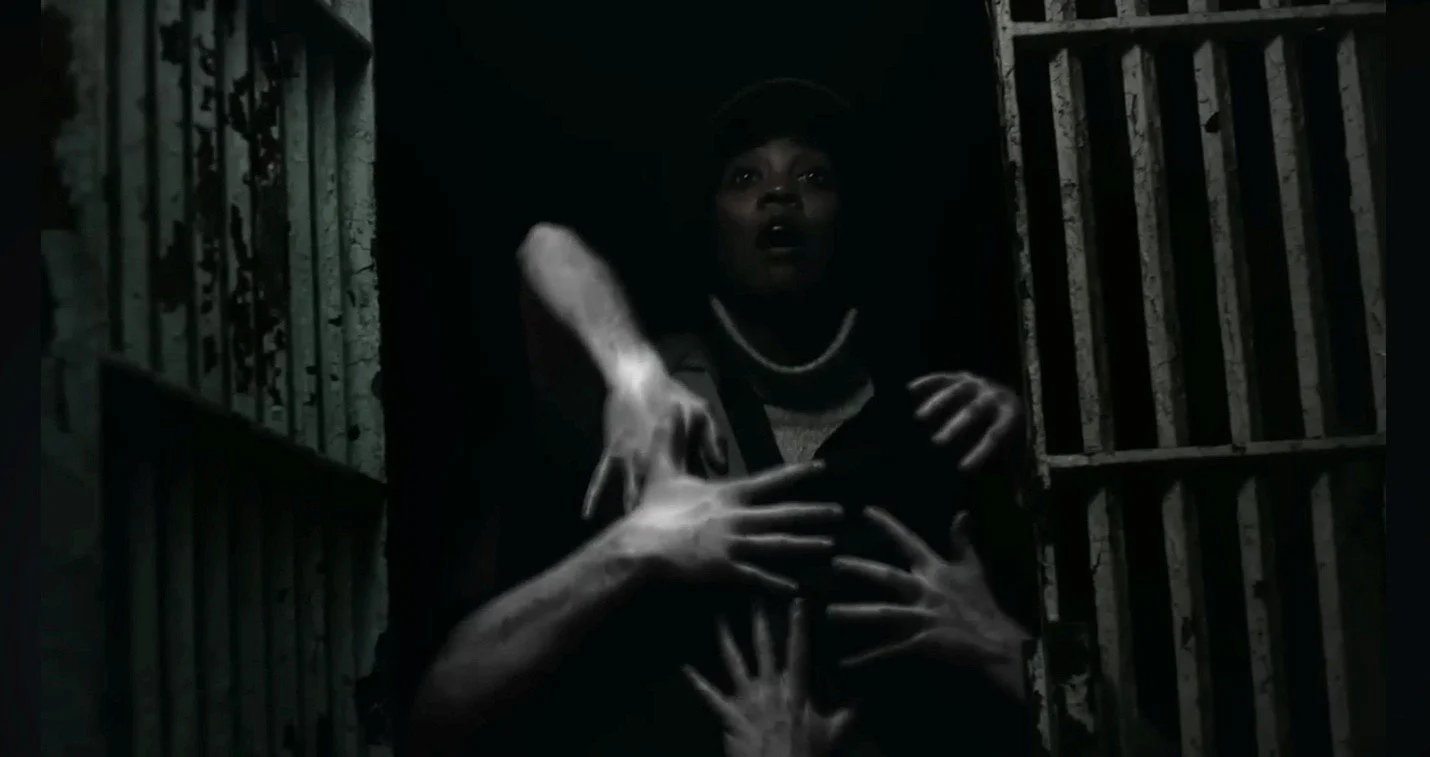
The Haunting of Cellblock 11 (2014)
🧠 Why This is scary
Prison horror films hit a nerve because they build on fears people already have about incarceration:
loss of control
isolation
institutional power
being forgotten
These films not only entertain us, but they shape how audiences imagine prison and punishment. They blur the line between justice and cruelty and they tell stories where legal systems fail and moral reckoning takes over.
Over time, these images stick-and once they stick, they influence how people think about crime, punishment, and who deserves to suffer.
⏭️ Where This Series Is Going
In the next post, I’ll look at how prison horror films show how institutional control can be terrifying.
If horror, crime, and pop culture interest you, this is a series worth following 👍🏻
Let me know in the comments what you think!
