

🔒When the System Becomes the Monster
In the last post, I introduced you to the theme of haunted prisons in prison horror films. Now I want to discuss something that is way more insidious and scarier—what happens when the institution becomes the villain?
One of the most unsettling themes in prison horror films is institutional betrayal. This is when the very system meant to provide order, safety, or rehabilitation becomes the source of harm.
Think about this for a moment.
In our society, prisons are meant to:
protect the public
maintain order
provide rehabilitation
uphold justice
supervise and care for inmates in their charge
But in some prison horror films, those promises are ignored.

Guards abuse their authority.
Wardens prioritize punishment over fairness.
Doctors experiment on inmates.
Administrators cover up violence.
So, instead of functioning as systems of justice, these institutions create and sustain suffering.
That reversal makes the horror feel inescapable.
🚫 No One Is Coming to Save You
Institutional betrayal intensifies horror because it removes the possibility of rescue.
If the danger comes from outside, there’s still hope—but if the danger comes from inside the system, where do you turn?
Prison horror films create a claustrophobic moral landscape where:
accountability disappears
power goes unchecked
fairness becomes irrelevant
The people in charge are often the architects of the violence the inmates are trying to survive.
Can you imagine? Not only are you in prison, but the administrators and guards are engineering circumstances to amplify the pains of imprisonment. While some of the public may think this is a good idea, that’s not the purpose of prison.
🔥 Punishment Over Rehabilitation
Prisons are part of the “correctional system” in the United States, so there is an implication that they should “correct” the individuals in their charge. However, some prison horror films mock the idea that inmates could ever be rehabilitated.
You can see this clearly in Prison (1987).
Warden Sharpe openly states his philosophy: punishment first, everything else is cosmetic. Therapy, education, and reform all amount to “window dressing.” His focus is control.
When an inmate dies under mysterious circumstances, Sharpe locks the prison down and instructs the guards to tear the cells apart. When they can’t find anything that explains the death, he blames the inmates collectively.
At one point, he tells them that if they insist on behaving like animals, they will be treated like animals.
Then comes one of the most brutal symbolic moments in the film.
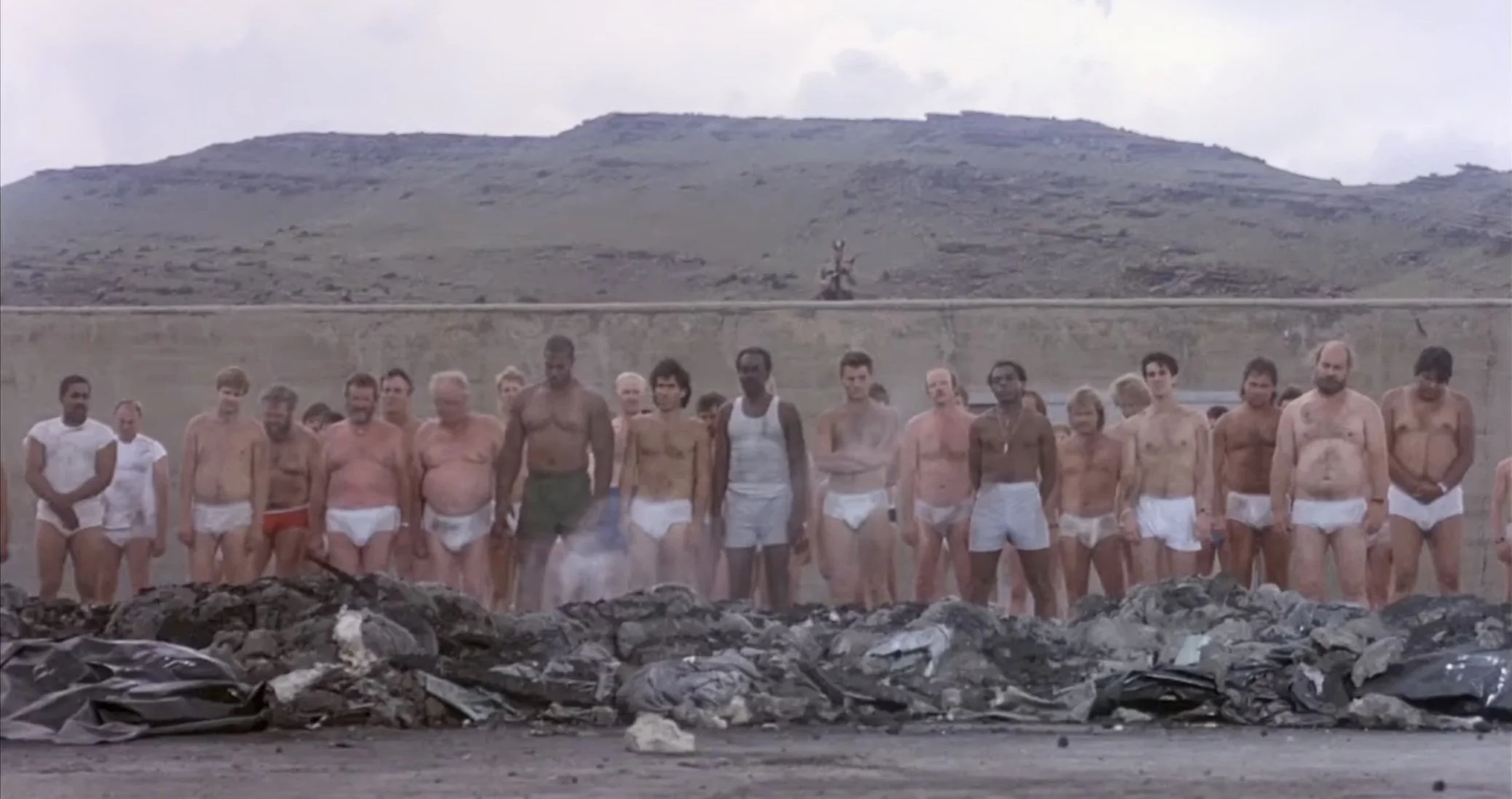
Scene from Prison (1987)
The inmates are taken to the yard. Their mattresses are soaked in gasoline.
Sharpe sets them on fire, creating a massive bonfire in the center of the prison.
“Now you don’t have cells,” he declares. “You have cages.”
That line says everything.
There was never a place for rehabilitation in that prison—it was always about dominance.
🧪 Scientific Rehabilitation Gone Wrong
A prison is a dream scenario for less than scrupulous scientists, as you have captive subjects to experiment on who have no power to fight back.
An example of this appears in Death House (2017).
This film centers on a secret prison where doctors conduct experiments on inmates under the guise of research. Agents touring the facility are told that the experiments allow scientists to study criminal behavior in controlled conditions.
In the film, the prisoners are:
paralyzed on gurneys
injected with drugs
placed into virtual simulations of their past crimes
The doctors claim they are studying behavior in action so they can “reformat” the inmates into more moral individuals.
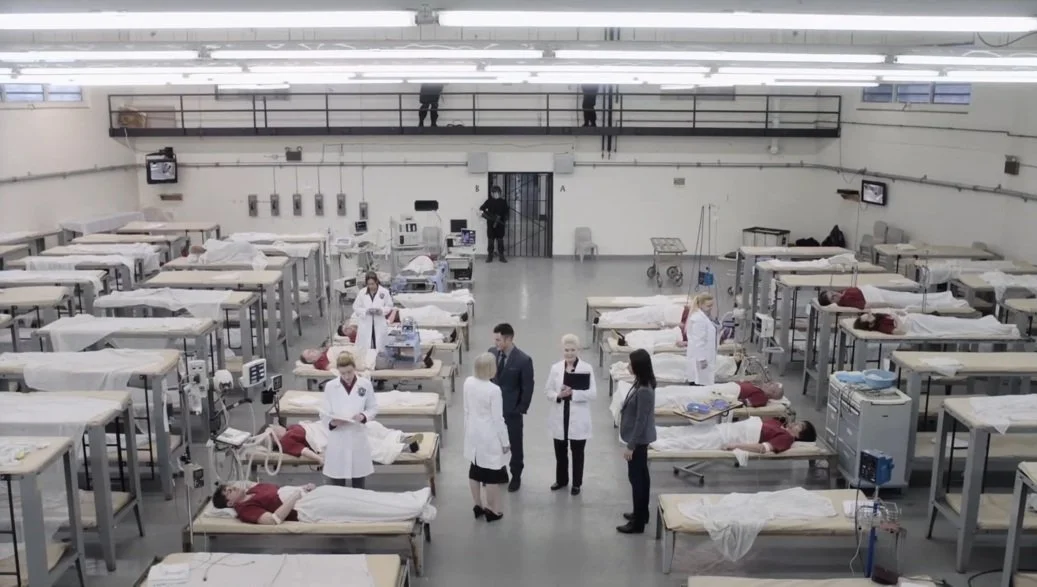
Death House (2017)
But here’s the reality.
The experiments involve unhoused individuals used as stand-ins for victims during reenactments. These people are treated as disposable and harming them is acceptable because it’s advancing science.
The language of “reform” masks how the doctors exploit powerless individuals.
The doctors present themselves as innovators, but in reality, they treat human beings as equipment in their experiments.
Note: Death House (2017) has been referred to as "The Horror Movie genre version of The Expendables" because so many iconic horror actors appear in it. If you can get through the less than stellar plot, it’s fun to see Bill Moseley, Tony Todd, Kane Hodder, Gunnar Hansen, Dee Wallace, Camille Keaton, Barbara Crampton, Michael Berryman, Sid Haig, Felissa Rose, and Tiffany Shepis, and a ton of other horror actors all in one movie!
🩺 Fiction Isn’t the Only Horror
Sure, when you watch prison horror films, the theme of institutional betrayal might seem exaggerated, right? I mean, it’s just a film—it’s not real life.
Wrong. There are instances of this happening in our countries history as recent as a couple of decades ago.
For example, between 2006 and 2010, nearly 150 women in California prisons were sterilized without proper state approval—or their knowledge. Some were reportedly targeted because officials believed they were likely to return to prison.
One doctor defended the cost of the procedures by arguing that preventing future births saved the state money in welfare expenses.
One incarcerated woman overheard others discussing sterilization and wondered aloud if officials saw them as animals who should not breed.
That question lingers.
When doctors impose their own ideology onto vulnerable bodies, the betrayal runs deep. The institution charged with care becomes the source of harm.
Prison horror films amplify these fears, but they didn’t invent them.
🧠 Why This Theme is So Important
Institutional betrayal resonates because it taps into a basic anxiety:
What if the system isn’t broken but functioning exactly as designed?
Prison horror films expose the gap between what institutions claim to do and what they actually do.
They show:
punishment replacing rehabilitation
authority replacing accountability
systems protecting themselves instead of people
🔜 Up Next in This Series
In the next post, I’ll look at grotesque punishment in prison horror films and why the body becomes the ultimate site of control and terror. If you’re into body horror, you’ll love the next blog 😉
If you’re interested in how prison horror films reveal uncomfortable truths about punishment and power, stay tuned!
